
KRES Faculty Year of Exploration Award
Each year, Goucher College enables its faculty to be lifelong learners and continue their intellectual curiosities and passions through exploration of the sciences, technology, and their relationship to society by supporting a group of faculty to embark on a “year of exploration.”
This innovative opportunity is made possible through support from the Myra Berman Kurtz Fund for Faculty Research and Exploration of the Sciences (KRES Fund), established by a generous pledge to Goucher College from Stuart Kurtz in honor of his late wife, Myra Berman Kurtz ’66.
Faculty are invited to submit a proposal for a year of exploration that involves pursuit
of a passion project that significantly differs from their prior area of research.
The award is designed to encourage faculty to pursue new intellectual experiences,
explore novel areas of knowledge, and push disciplinary boundaries. In its first five
years, this program has supported new research projects for 18 different Goucher faculty
members from 13 different academic disciplines.
Current KRES recipients

Stefanie Kasparek, Assistant Professor of Data Science
True Crime and Crime Reality: Representativeness in Dateline NBC, 1992-2025
The project investigates whether Dateline NBC—one of America's longest-running true-crime programs, with over two million regular viewers—systematically misrepresents the demographics, geography, and nature of crime compared to official crime statistics. Drawing on more than 3,000 episodes aired between 1992 and 2025, the study will examine how victim and offender characteristics, such as race, gender, and socioeconomic status, are portrayed relative to real-world crime data and whether these patterns have shifted over time. The research combines a longitudinal analysis of Dateline episodes with original survey data on public perceptions of crime and true crime shows, using statistical modeling to assess the gap between televised narratives and empirical crime trends. Findings will contribute to ongoing conversations on journalism ethics, media literacy, and the role of entertainment news in shaping public attitudes toward crime and criminal justice policy.
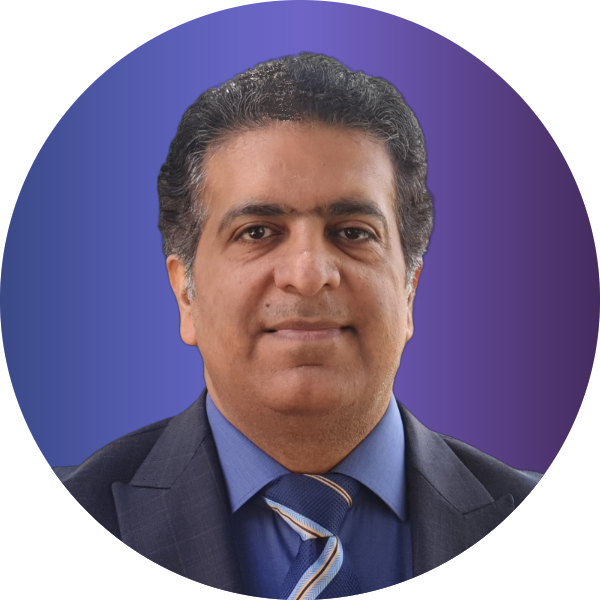
Mohammad Naderi Dehkordi, Associate Professor of Computer Science
Data Privacy, Institutional Power, and Ethical Governance in Higher Education: An Exploratory Study of Sociotechnical Frameworks for University Data Practices
This project examines how universities develop and implement privacy, data governance, and technology-use policies, with a focus on ethical, legally compliant, and privacy-preserving practices. By analyzing existing institutional policies at Goucher College and benchmarking them against national standards such as FERPA, the project aims to identify gaps and opportunities to strengthen data privacy frameworks. The ultimate goal is to produce actionable recommendations and a comprehensive, interdisciplinary framework that supports the responsible, transparent, and ethical use of student, faculty, and institutional data.
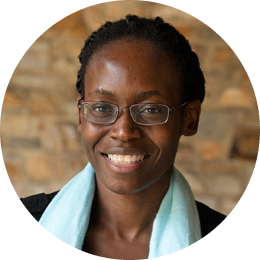
Arlette Ngoubene Atioky, Associate Professor of Psychology
Help-Full Birthing Experiences of Black Mothers
This project is a qualitative research study on the helpful birthing experiences of Black women who have successfully labored and delivered a child/children in a hospital setting in the U.S. in the last six months and up to two years ago.
Previous KRES recipients
2025
Synthesis and Evaluation of Aptamers That Can Be Used as Drug Delivery Agents for Cancer Drugs. George Greco, Chemistry
Data Science Meets Athletics: Bridging Academic Learning and Athletic Excellence. Tom Narock, Data Science
Politicizing Science: A Historical and Contemporary Examination. Jenn da Rosa, Environmental Studies.
Body and Mind in Jane Austen. Juliette Wells, Literary Studies
2024
Brain Fundamentals: Neuroscience and Philosophy. Steven DeCaroli, Philosophy
Use of Artificial Intelligence for Training Case Conceptualization and Treatment Planning in Psychotherapy. Amanda Draheim, Psychology
Doula Support and Reproductive Justice in Baltimore. Ann Duncan, American Studies and Religion
Generative AI as a Writing Consultant for Second-Language Learners. Lana Oweidat, Professional & Creative Writing
2023
Using Social Network Analysis to Study Extremism. Julie Chernov Hwang, Political Science and International Relations
Alignment Sensor for Nanodevices: Navigating Without Vision in a Microscopic World. Nina Markovic, Physics
Reading Fiction: A Cognitive Psychology and Neuroscience Based Inquiry. Antje Rauwerda, Literary Studies
Game-Based Learning in Business Management. Mehdi Shadaei, Business
2022
Mirror Mirror. Sonja Bozic, Communications and Media Studies
Expanding and Exploring: A Biologist’s First Foray Into Biology Education Research. Natalie van Breukelen, Biology
Can Our Understanding of Enzymes Help Treat Malaria? Judy Levine, Biology