
Kimberley Gordy ’06
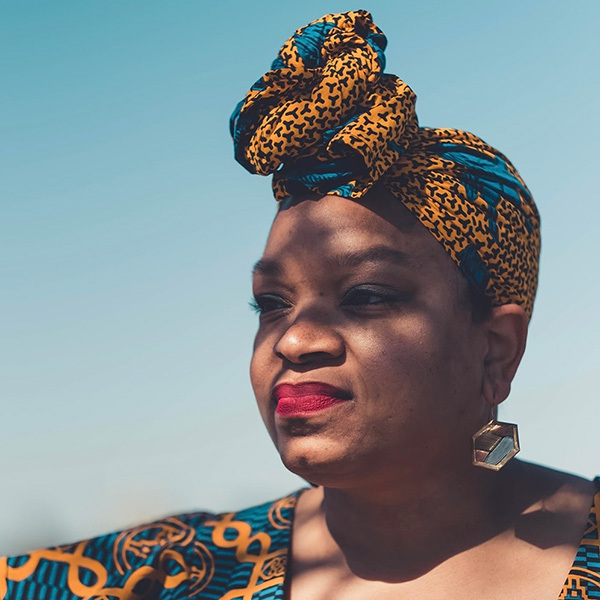
Meet Kimberley Gordy ’06, a Goucher graduate in biology. She currently works in the Spiritual Care Department at WakeMed Health and Hospitals, based in Raleigh, NC.
Biological Sciences
Spiritual Care, WakeMed Health and Hospitals
“I feel my Goucher experience helped me inhabit my voice and become emboldened in my unique lens, while also bringing out my strengths of curiosity and care that helped me genuinely connect with others.”
Tell us about organizations, clubs, athletic teams, or other activities you participated in at Goucher and how you stay involved with your alma mater as an alum.
While at Goucher I played on the women’s basketball team; was a resident assistant for one year; participated in a Goucher Christian Fellowship; helped compile one of the literary magazines one year with Ailish Hopper; and founded the Kente ceremony at Goucher. As an alum, I held prior terms with the Alumnae/i and Alumni of Goucher College (AAGC) and am a member of the Black and African American Alumni Affinity Group (BAAAAG).
What skills or experiences have helped you the most in your career journey?
I recall giving a speech in my senior year at Goucher as a thank you to donors for scholarships. Part of what I recall in that speech was being so close to the end of my undergraduate career and becoming cognizant of so many more questions. It was a realization that college was not just to answer questions but also to equip us with tools to investigate our questions and to evolve us as we asked better questions. I have found that to be true at subsequent stages of reflection in life, what guided me through earning my M.Div., what informs my spiritual journey, and part of what makes my perspective unique. In my work, it helps me develop curriculum, build interdisciplinary relationships, create and write evaluations, etc. Interdisciplinary learning fuels and generates unique perspectives. Goucher as a place for transcending boundaries had a role in cultivating that within me.
Who at Goucher had a lasting impact on your experience there?
I want to shout out some employees who may tend to go unrecognized or overlooked: Jetty and Rebecca in Facilities; RIP to Skip “Russell” Lee; Maurice was also a Facilities staff worker who I believe also died; I enjoyed talking with him. Miss Sharon from Bon Appetit always had good conversations, and I felt like she really looked out for me, like making sure I came through regularly, noticing if I didn’t, and checking to make sure I was healthy and OK. Then there were additional Black staff and faculty who made a connection with me that I value and in some cases still benefit from to this day: Sharon Hassan from Financial Aid, Angelo Robinson, even though I never got to take a class with him; Kelly Brown Douglas—could never say enough about her care; LaJerne Cornish—legendary; Dean Gail Edmonds—a dynamic leader and fierce advocate for students; Lisa Hill in admissions is such a gem, so kind, multitalented, excellent at whatever she does and such a rich resource of not just institutional knowledge but also higher educational context.
How has your Goucher education empowered you to make a difference in your community, field, or the world?
I feel my Goucher experience helped me inhabit my voice and become emboldened in my unique lens, while also bringing out my strengths of curiosity and care that helped me genuinely connect with others. Sometimes that meant taking time to notice someone or something that had been overlooked. From my present vantage point, I know those behaviors and practices as ministry of presence, accompaniment, and intentionally slowing down. I am trying to drive change by embodying those practices as an educator of spiritual care providers in health care settings. We have the opportunity to bear witness to people’s stories in crisis and life-altering moments. Slowing down, sitting with feelings, and other such practices have been counter-cultural. But they are healing practices. I am also driving change in being myself and pursuing the path to becoming an ACPE Certified Educator. I am part of a wave of changing demographics in the organization. My intersectional identities inform the ways I and others like me experience disparities in health care. These influence patients’ experiences and therefore my students need to be informed and prepared to address and handle them.
Do you have any advice for prospective or current Goucher students?
I realize that my framing as a chaplain now makes me resist giving unsolicited advice! So instead I will pose a question for reflection: What is important to you that can uniquely be conveyed from your unique lens? The answer to this may be more than one thing. It may have multiple responses as time goes on. I look back and marvel at the way my connection to the African diaspora and my heritage have amplified in my life since my time at Goucher. I wanted to have a Kente ceremony because it made an enormous imprint on my 14-year-old heart when my cousin Sam graduated from his university. At this present stage of life, I believe it was divinely influenced by my ancestors, and I continue to strive to honor their lives and sacrifices by inhabiting my life as fully as possible. I hope that anyone willing to ask themselves that question periodically will benefit by being able to reflect internally in a way that helps them inhabit the fullness of their lives as well.
Why do you choose to give your time, expertise, or financial support to Goucher?
Sankofa is an African word of the Akan tribe. It is often represented by a bird with a long neck reaching backward upon itself. One translation of the word is “it is not taboo to fetch what is at risk of being left behind,” or more commonly stated as “go back and get it.” As a member of many communities, who has richly benefited from the generosity, care, and thoughtfulness of others, this is why I give what I can, when I can. And why sometimes I accept that it is my time to receive or ask for help without shame.
Anything else you’d like to share with the community?
I'll recommend two podcasts and a book: Our Ancestors Were Messy, hosted by Nichole Hill, is historic but interdisciplinary and somehow a multimedia listening experience. Nichole and her team comb through archival material to bring to life the lived experiences of Black historical figures, going deeper and wider than typical blurbs of Black History Month. It’s fun and it makes me feel closer to the humanity of the people whose legacies I benefit from.
Beyond Sunday Morning is a podcast created by someone I met in seminary that utilizes storytelling, conversation, spiritual practice, and collective remembering to share, explore, and present the sacred in a nontraditional format associated with the experience of divinity. If you check it out, you may see a familiar face in Season 2!
Learning to move out of overreliance on logic and being in my head, and instead valuing my embodied experience and knowledge, has been life-changing for me. I recommend the book Our Bodies Are Alive: Self-Literacy as an Embodied Healing & Liberative Practice, by Dr. Bridget L. Piggue.