

M.A.C.L.M. Faculty
The faculty who will guide you through the curriculum at Goucher are not just professors, and they're not just at Goucher. They are distinguished leaders in their fields. They bring a depth of practical experience that is invaluable to students.
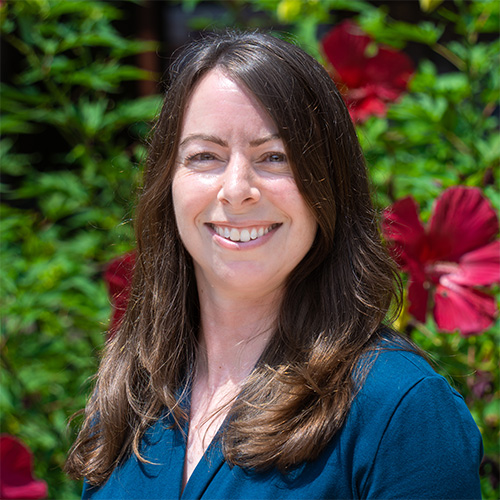
Melanie Lytle
Academic Director
Email: Melanie.Lytle@goucher.edu
Melanie Lytle is the director of the MA in Cultural Leadership and Management at Goucher College, where she also serves as Assistant Professor of Practice and director of the MA in Historic Preservation. An alumna of Goucher’s graduate program, her career has focused on the intersection of cultural heritage, nonprofit leadership, public policy, and community engagement. Her professional background includes work as a heritage consultant and in senior leadership roles within nonprofit and advocacy organizations. She is also the owner of a mission-driven craft restoration business, bringing an applied, entrepreneurial perspective to cultural leadership, organizational management, and ethical decision-making. Melanie is a longtime board member of Restoration Works International and has worked with the organization in Nepal, India, and the United States. Her work is grounded in a commitment to cultural sustainability, collaborative leadership, and community-centered practice.

Robert Baron
Robert Baron has directed the Folk Arts Program, Music Program and Museum Program of the New York State Council on the Arts (NYSCA), served as Folklore Administrator of the National Endowment for the Humanities and was a museum educator at The Brooklyn Museum. Baron has been a Fulbright Senior Specialist in Finland, the Philippines and Slovenia, a Smithsonian Museum Practice Fellow, and Non-Resident Fellow of the W.E.B. Du Bois Institute for African-American Research at Harvard University. He is a Fellow of the American Folklore Society (AFS), which he serves as Secretary, and received the AFS’s Benjamin A. Botkin award for significant lifetime achievement in public folklore. Baron is the Secretary of the Steering Committee of the ICH NGO Forum, which provides advisory services in the framework of the 2003 UNESCO Convention for safeguarding intangible cultural heritage. He has carried out field research in the Caribbean, US and Japan, and his research interests include heritage studies, public folklore, cultural policy, creolization and museum studies. Baron’s publications include Public Folklore, edited with Nick Spitzer; Creolization as Cultural Creativity, edited with Ana Cara; and articles in Curator, International Journal of Heritage Studies, Journal of American Folklore, Western Folklore and the Journal of Folklore Research.
Ph.D. in Folklore and Folklife, University of Pennsylvania.
M.A. in Folklore and Folklife, University of Pennsylvania
A.B. in Anthropology, University of Chicago

Barry Dornfeld
Barry Dornfield is a Principal at CFAR, a management consulting firm in Philadelphia, a documentary filmmaker, a media researcher, and an educator. His documentary work includes: "Eatala: A Life in Klezmer," co-produced with the Philadelphia Folklore Project and broadcast in Philadelphia; "LaVaughn Robinson: Dancing History;" "Gandy Dancers," portraying the expressive culture and history of African-American railroad workers in the US; "Look Forward and Carry on the Past: Stories from Philadelphia's Chinatown;" "Powerhouse for God" and "Plenty of Good Women Dancers: African-American Women Hoofers in Philadelphia." Dornfeld recently co-authored The Moment You Can't Ignore: When Big Trouble Leads to a Great Future, with Mal O'Connor (Public Affairs 2014). He has taught at New York University and chaired the Communication Department at the University of the Arts, Philadelphia.
Ph.D., Annenberg School for Communication
B.A., Tufts University

Susan Eleuterio
Susan Eleuterio is a professional folklorist, educator, and consultant to non-profits. She has conducted fieldwork and developed public programs including exhibits, performances, folk arts education workshops and residencies in schools, along with professional development programs for teachers, students, adults, and artists for schools, museums, arts education agencies and arts organizations across the United States.
She serves as Chair of the Board of Directors for Illinois Humanities and is the former Co-Chair of the Chicago based Crossroads Fund Board of Directors. Eleuterio is the author of Irish American Material Culture: A Directory of Collections, Sites and Festivals in the United States and Canada, as well as essays in the Encyclopedia of Chicago History, the Encyclopedia of American Folklore, the Encyclopedia of Women’s Folklore and Folklife, Ethnic American Food Today: A Cultural Encyclopedia, "Statewide Models for Folk Arts in Education" in the Missouri Folklore Society Journal, and a collaboratively written chapter: "Even Presidents Need Comfort Food; Tradition, Food and Politics at the Valois Cafeteria" in Comfort Food, Meanings and Memories (2017 University Press of Mississippi ).
Recent work includes publication of the chapter, "Pussy Hats: Common Ground At the Chicago Women's March in Pussy Hats, Politics and Public Protest (2020:University Press of Mississippi) and as a consultant in exhibit development, public programming, and K-12 curriculum for the Center for Folklore Studies at the Ohio State University’s Placemaking in Scioto County project. She also serves as the Board Treasurer for Southern Ohio Folklife and is Co-Chair of the American Folklore Society’s Media and Public Outreach Committee.
M.A. in American Folk Culture, SUNY
B.A. in English/Education, University of Delaware

Robert Forloney
Robert Forloney is a Cultural Institution Consultant working with a number of clients to develop innovative programs, train interpreters and facilitate strategic planning. He has worked in the museum field for more than twenty years- as a teacher for the New York City Museum School as well as an educator, administrator and consultant at institutions such as the Brooklyn Museum of Art, the Museum of the City of New York, the Morgan Library, American Museum of Natural History, the Museum of Modern Art and the South Street Seaport Museum. Most recently he served as the Director of Breene Kerr Center for Chesapeake Studies at the Chesapeake Bay Maritime Museum where he oversaw interpretative, academic, folklife and exhibition programs. In addition, he has formally taught as a classroom teacher for the New York City Museum School, adjunct faculty at Goucher College, University of Delaware and Johns Hopkins University.
Trained in both formal and informal teaching methodologies, much of his work has been directly related to integrating these theories into innovative programming for diverse public audiences. His goal is to enable all audiences to actively engage objects, images and exhibitions in order to successfully access visual and textual information, acquire new knowledge and create personal meaning. Robert strives to ensure that communities have their voice heard and are empowered by the cultural institutions that attempt to share their stories.
Areas of expertise include program development for diverse audiences, interpreter training, staff supervision and coordination, community engagement, exhibition design, grant writing and management as well as strategic planning for cultural institutions.
M.A in Humanities and Social Thought, New York University
Teaching Certificate, Bank Street College of Education
B.F.A. in Fine Arts/Sculpture, Parsons School of Design, New School for Social Research
Amy S. Millin
Trained as a clinical social worker, Amy Millin previously worked with children and youth at Jane Addams Hull House (Chicago) and Carson Valley School (Flourtown, PA). So began what has become a life journey of exploring what it means to be resilient, the role stories have in our lives, the strength of communities, and the power that results through partnerships. This journey led her to the M.A.C.S. program for a second master's degree. Her research explored the intersection of cultural health, equity, and the use of public space, for which she was recognized with the Harold Atwood Anderson Award, the Julia Rogers Research Prize, and the Rory Turner Prize in Cultural Sustainability.
Amy is the President/Executive Director of the Maryland Lynching Memorial Project, where her work is centered on the ways that community programming creates opportunity for conversation at the local level, across the state, and nationally. She also serves as a Commissioner on the Maryland Lynching Truth & Reconciliation Commission—the first and only such Commission in the country. She is a consultant for the National Council for the Traditional Arts where she provides development services and research and supports the National Endowment for the Arts' National Heritage Fellowship Honorifics as well as National and Legacy Folk Festivals.
An ongoing focus in exploring the relationship between people, community, and place/space has led Amy to deepen her skills in the areas of digital storytelling, ethnography, and community-focused non-profit leadership through additional training from the Vermont Folklife Center, StoryCenter, the University of Maryland—Baltimore County, and the University of Connecticut.
M.A. in Cultural Sustainability, Goucher College
M.S.W. in Family/Child Welfare, University of Pennsylvania
B.A. in Sociology, Oberlin College

Amy Skillman
Amy Skillman is a folklorist whose work occurs at the intersection of culture and tension, where paying attention to culture can serve to mediate social change and foster cultural equity. She advises artists and community-based organizations on the implementation of programs that honor and conserve their cultural traditions, guides them to potential resources, and works with them to build their capacity to sustain these initiatives. For over 20 years, her work has integrated personal experience narratives of immigrant and refugee women into leadership empowerment initiatives. Working in collaboration with the PA Immigrant and Refugee Women’s Network, she has co-produced an exhibition called Our Voices, a theater piece about Coming to America in the 21st Century, and a reader’s theater called Magnificent Healing, which explores various cultural collisions with our healthcare system. She is currently working with the Susquehanna Folk Music Society to document traditional artists in Central Pennsylvania and create public programming that draws attention to and honors the breadth and depth of their work.
Other work includes a Grammy-nominated recording of Old Time fiddlers in Missouri, a yearlong arts residency with alternative education high school students rooted in the ethnography of their lives, and a traveling exhibition called Making It Better, about the role of folk arts as a catalyst for activism in communities throughout Pennsylvania. She has been teaching in the MACS program since 2011 and became Director in 2012. She is a Fellow of the American Folklore Society and a recipient of the society’s Benjamin A. Botkin award for significant lifetime achievement in public folklore. She currently serves as President of the American Folklore Society.
M.A. in Folklore and Folklife, University of California-Los Angeles
B.A. in Cultural Minorities and the Immigrant Experience, St. Lawrence University

Rory Turner
Rory Turner is Professor Emeritus at Goucher College. He designed, launched and continues to teach in Goucher College's Master of the Arts in Cultural Sustainability Program. Formerly Program Director for Folk and Traditional Arts and Program Initiative Specialist at the Maryland State Arts Council, he co-founded and directed the Maryland Traditions program from 2000-2007. He also founded and subsequently revived the Baltimore Rhythm Festival. Fieldwork has taken him to Bali, Senegambia, Nigeria, Ghana, as well as the neighborhoods and communities of Maryland. In 2021, he produced African Strings: A House Concert, a film for The Performing Arts Center for African Cultures (PACAC). The concert featured noted musicians Cheikh Diabate, Amadou Kouyate, Osei Korankye, and Kweku Owusu. Recent publications include “Radical Critical Empathy and Cultural Sustainability” a chapter in Cultural Sustainabilities: Music, Media, Language, Advocacy (University of Illinois Press); “Cultural Sustainability: A Framework for Relationships, Understanding, and Action” co-written with Michael A. Mason in the Journal of American Folklore and “Talking about the Weather: Radical Critical Empathy and the Reality of Communitas” in The Intellectual Legacy of Victor and Edith Turner. Additional academic and creative writing can be found in such journals as Journal of American Folklore, Folklore Forum, Journal of Folklore Research, Anthropology and Humanism, and TDR (The Drama Review).
Ph.D. in Folklore, Indiana University-Bloomington
M.A. in Folklore, Indiana University-Bloomington
B.A. in Religious Studies, Brown University
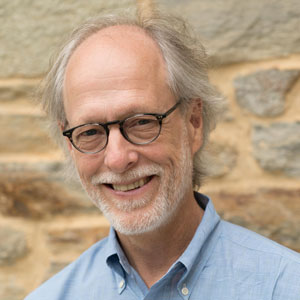
Thomas Walker
Thomas Walker's work focuses on a human dimensions approach to the study of the natural and built environments. He has worked in museums and arts organizations, including a virtual museum developed at Indiana University based on a collection of historic log buildings and documentation of traditional culture of the area. He has also conducted oral histories of historic preservation in Indiana and documented maritime culture in the Chesapeake Bay region as well as in New York harbor to contextualize the history of the seaport and its collection of historic vessels and buildings. As a venture philanthropist, he has served as a trustee for the Alex C. Walker Foundation, which funds research, policy, and projects investigating environmental economics in areas of climate change, energy and tax policy, ecosystem services, ecotourism, and sustainability in forests and fisheries.
Ph.D. in Folklore and Anthropology, Indiana University-Bloomington
M.A. in Folklore and Anthropology, Indiana University-Bloomington
B.A. in English, St. Lawrence University